

Barrier care appears on many skincare shelves, but the phrase can become so familiar that it stops explaining anything. Begin with a simple idea: the skin’s outer layer helps separate the body from its surroundings and helps limit water loss. That is a useful foundation, rather than a diagnosis you can make from a photograph.
A general guide should help you ask clearer questions. It should not turn an ordinary change in how your skin feels into a reason to buy a whole new routine.
Keep the basic idea simple
The outer skin includes cells and lipids that contribute to its barrier function. Moisturizers can support skin hydration through different ingredients and mechanisms. The linked DermNet resource explains the broader roles of moisturizers.
You do not need a complicated analogy to use this information. Think about the difference between a general description of skin and a specific claim about a product. Understanding the first does not automatically prove the second.
Write down observations, not diagnoses
If something has changed, note what you can actually observe and when it started. Include new products or changes in your routine that might be relevant. Use your own ordinary language rather than choosing a diagnosis from social media.
A clear record is useful if you ask a professional for advice. It is more informative to bring the product names and a timeline than to arrive with a long list of ingredients you have decided must be responsible.
Review the products you already own
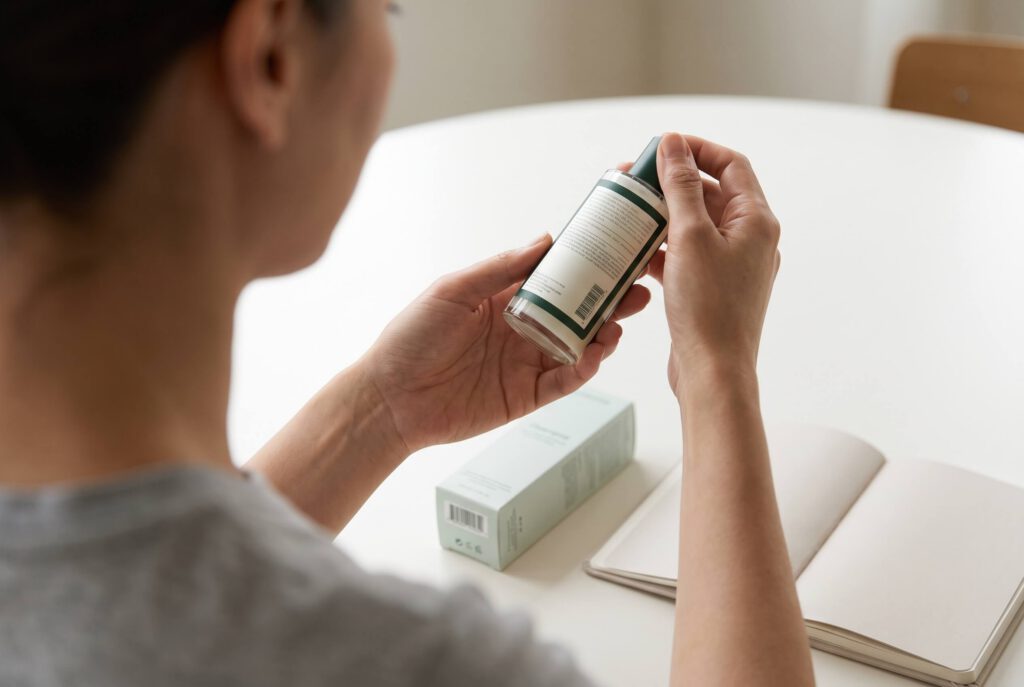
Read directions and product information before adding anything new. Check whether several products occupy the same place in your routine. Put unopened options aside while you decide what question you are trying to answer.
A shelf review can be purely practical. You may discover that a product name is hard to read or that instructions were left on a carton in another room. Gathering the information in one place makes future decisions easier.
Look beyond the headline
A barrier-related product name is not a full explanation of the formula. Look for its intended use, directions and complete ingredient information. Ask the maker about any claim you do not understand.
Do not expect every product with the same word on its label to feel or behave identically. The format, formulation and directions can differ. A useful comparison focuses on complete products rather than sorting them by one marketing phrase.
Know when a guide is not enough
Persistent or severe skin symptoms deserve advice from a qualified clinician. Bring your notes and the relevant product information. A general article cannot assess your skin or replace care tailored to you.
If you have already been given medical instructions, keep them central to your routine. Educational reading can help you understand the conversation, but it should not prompt you to change prescribed care on your own.
Make understanding the goal
Choose one question to explore next. It might be about a moisturizer’s texture, the wording on a label or how a product should fit your existing routine. A specific question is easier to answer than the idea that everything needs to change.
Barrier care becomes more useful when it means paying attention to clear information and your own circumstances. You can learn something worthwhile today without adding another bottle to the shelf.