
A skincare label has several jobs to do in a very small space. It identifies the product, explains how it is intended to be used and carries details that may only matter when you have a question later. Reading it is easier when you give yourself a clear order.
You do not have to understand every technical word before making a useful start. Begin with information you can locate and keep, then identify the questions you still need answered.
Find the exact product identity
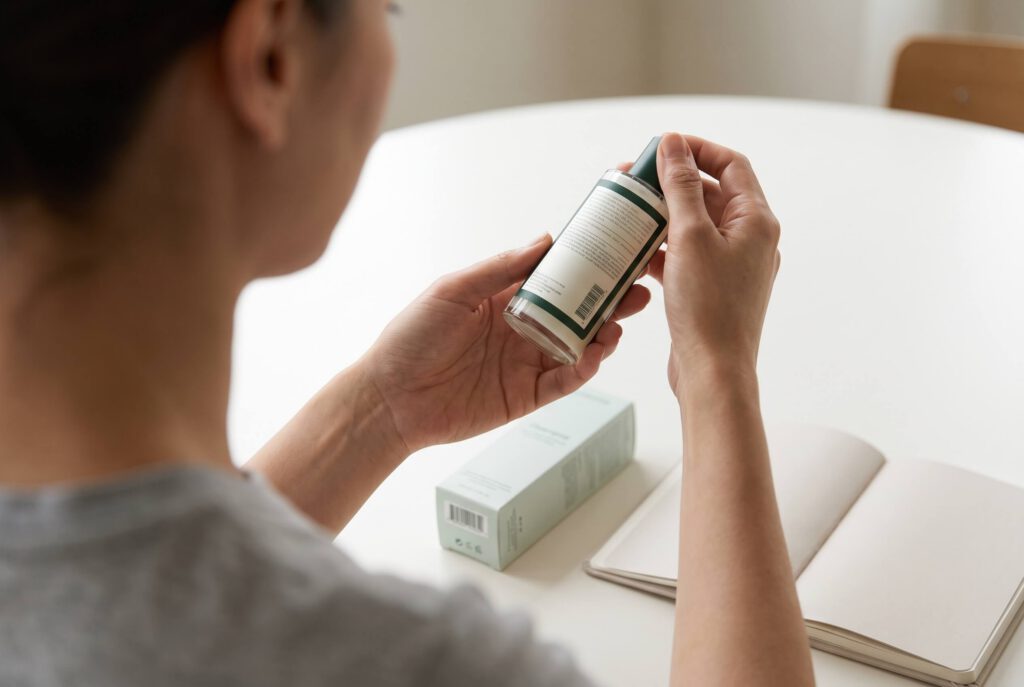
Write down the full product name and maker. Similar names within a range can refer to different formulas, sizes or intended uses. Keep a photograph of the front and back together so you can refer to the same product when searching online.
If you contact customer support, include the precise name rather than a description such as the green bottle. Keep any batch information available too. Clear identification saves both sides from discussing a different product.
Read the directions as a whole
Look for how to apply the product, whether it is rinsed away, any timing information and warnings. Read the surrounding text rather than lifting one sentence out of context.
A retailer’s short description may leave out instructions from the package. Where information differs, ask the manufacturer to clarify. Do not improvise a combination of conflicting directions.
Use the ingredient list to ask questions
Copy unfamiliar names accurately if you want to research them. Avoid deciding that a long word is automatically undesirable or a familiar word automatically suitable. An ingredient list is not a simple good-or-bad score.
You are using a complete formula. Learning an ingredient’s general role does not tell you every detail about the product containing it. Keep product claims, personal preferences and basic ingredient information separate in your notes.
Keep storage information
Look for the maker’s storage and usable-life guidance and retain it with the product. The FDA explains that how cosmetics are stored and handled can affect their usable life. Ask the manufacturer if the information you need is missing.
An opening-date note can be useful beside your product record. Do not rely on memory when several bottles look similar. A small record is easier to maintain than reconstructing dates months later.
Know what you still do not know
Write a short list of unanswered questions before contacting a brand. Ask about the exact product, the wording you do not understand and the information you need in order to use it as directed.
Avoid asking a label to answer a question that requires individual medical advice. If you have a diagnosed condition, allergies or prescribed treatment, bring the product information to an appropriate professional.
Create a reusable reading habit
Use the same order each time: identify, read directions, review ingredients, keep storage details, then ask questions. This makes a new label less overwhelming without pretending that every product is simple.
The aim is to leave with enough information to make a considered decision. You may choose the product, ask for clarification or decide to wait. All three are more useful than buying something whose directions you cannot confidently follow.