

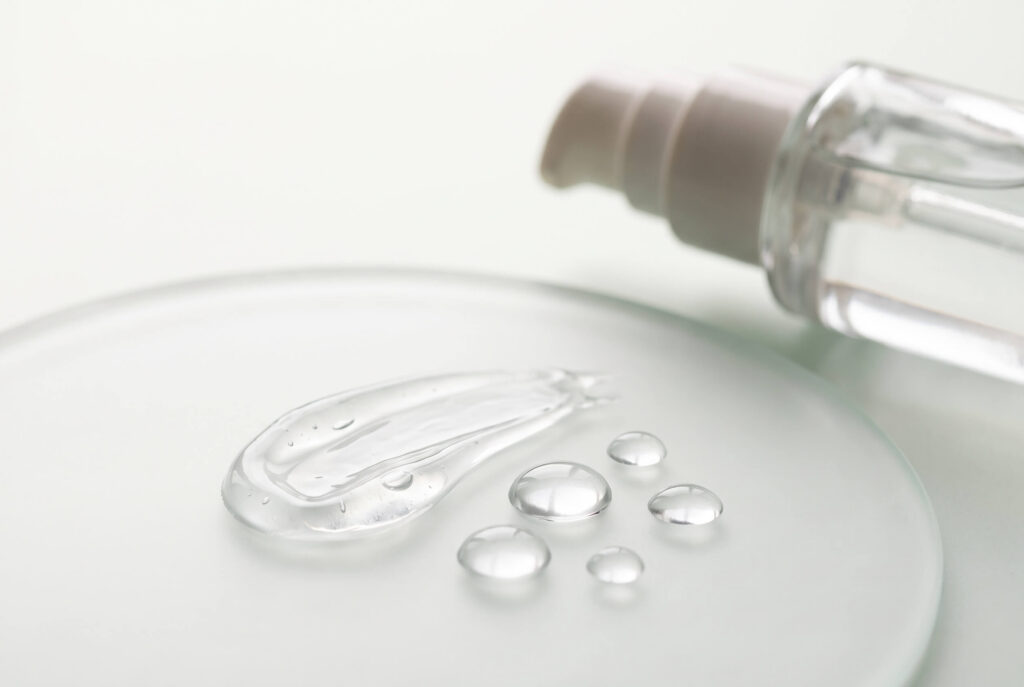
Some ingredients receive a whole campaign. Others appear quietly on labels across many different products. Glycerin belongs to the second group, which makes it a useful place to begin learning how to read beyond the front of a bottle.
You do not need to memorise a dictionary of ingredients. Start with one name, understand its broad role, and then return your attention to the product as a whole. That is a more manageable habit than trying to decode every unfamiliar word in one sitting.
Understand the broad role
Glycerin is a humectant: an ingredient used to attract and hold water. DermNet lists glycerine among the humectants used in moisturizers. The feel and performance of a finished formula depend on more than this one ingredient.
This distinction is useful when shopping. Seeing glycerin on two labels does not mean the products will have the same texture, directions or intended use. Treat the shared name as one piece of information, not a reason to consider the bottles interchangeable.
Read the product description carefully
Ask what kind of product you are looking at. Is it a cleanser to rinse away, a leave-on moisturizer, or something else? The directions tell you how the manufacturer intends you to use the formula.
Keep marketing descriptions separate from instructions. Words about a fresh or silky feeling describe an experience; they do not replace details about where, when and how to apply the product. If those details are hard to find, that is a useful question to send to the brand.
Notice how the formula fits your day
Consider the packaging and the setting in which you will use it. A product that is easy to dispense and identify can be easier to keep in a regular routine. These ordinary details deserve a place beside the ingredient list in your decision.
Once you are using a product as directed, write down practical observations in your own words. Perhaps you prefer the pump, or the texture takes more attention to spread than you expected. Keep observations about your experience separate from assumptions about an individual ingredient.
Avoid building a routine from isolated names
An ingredient-led shopping list can quickly become a shelf of products with overlapping jobs. Before buying another bottle, ask where it would fit. If you cannot explain its role, save the information and return to it later.
There is no need to find a dedicated product for every ingredient you learn about. Your existing moisturizer may already contain several ingredients you are curious about. Reading its label can be a useful first step before looking for anything new.
Keep a small ingredient notebook
Write glycerin on one line, humectant on the next, and add the name of a product in which you have seen it. Record the source you used to learn about it so you can revisit the explanation.
As your notebook grows, organise it around questions rather than rankings. What is this ingredient’s general role? Which finished product contains it? What does the product label say? A few accurate notes can make a crowded shelf feel much easier to understand.