
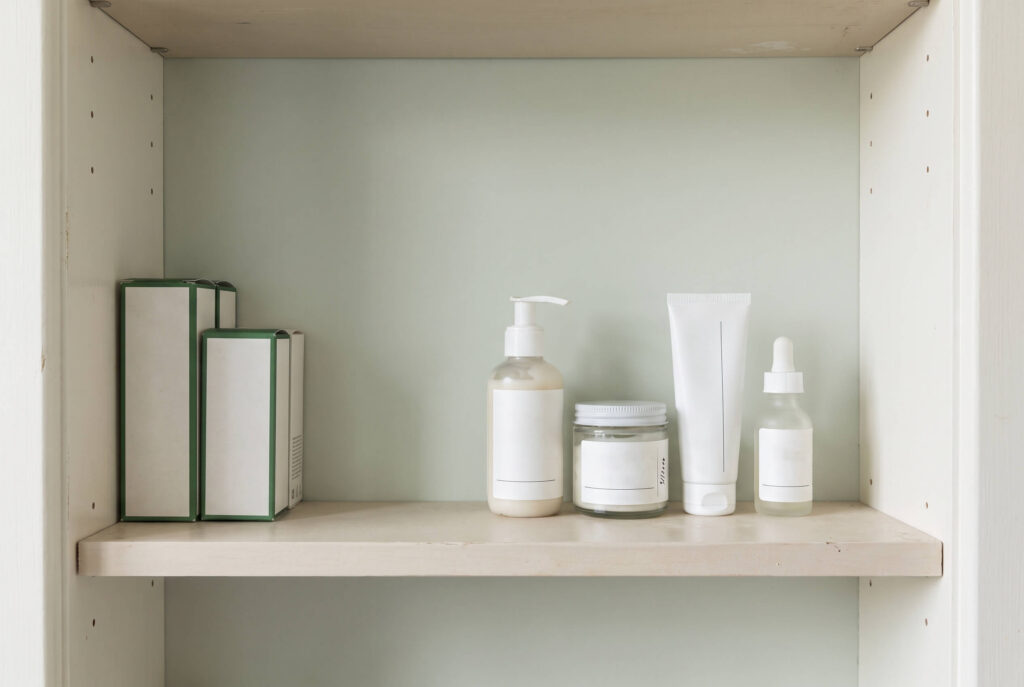
An organised shelf does not need identical bottles. It needs a system that lets you find the right product, read its directions and put it back easily. The most useful arrangement may look different from a photograph of someone else’s bathroom.
Start by taking stock on a clear surface. Keep the product names facing you and group the items by how you actually use them. This is an inventory, not a reason to replace everything that does not match.
Separate open from unopened
Keep unopened products apart from the ones in your current routine. That makes it easier to see what is already in use before buying a replacement. Put a note on your shopping list rather than relying on the memory of a nearly empty bottle.
If several people share the space, give each person’s products a recognisable area. The system should be obvious enough that putting things away does not require a discussion every evening.
Make names and directions accessible
Turn labels forward and leave enough room to pick up a bottle without moving everything beside it. Store cartons or photographs of instructions in a place you can find again.
Avoid covering useful information with decorative labels. A small opening-date note can sit alongside the existing information instead of replacing it. Keep the precise product name in any digital record.
Respect the storage instructions
Follow the manufacturer’s storage guidance. The FDA explains that temperature, moisture and handling can affect cosmetics; keep containers clean and avoid unsuitable heat. If you are unsure about a changed product, ask the maker rather than relying only on appearance.
Choose the storage location before buying organisers. A container that fits a shelf poorly can block ventilation, hide labels or make bottles unstable. Measure the space and consider how you use it.
Arrange by frequency
Put the products you use regularly where they are easiest to reach. Keep occasional items together with a clear reminder of their directions. Do not let the layout imply that every bottle should be used every day.
Leave some empty space. It makes the shelf easier to clean and gives your hand room to move. Empty space is useful even if it means the arrangement looks less full.
Review before shopping
Read your inventory when a product is nearly finished. Check whether you already have a suitable replacement waiting. If you are considering something different, write down the question you want that change to answer.
A product you do not enjoy using does not need to become the basis of a larger collection. Keep your observations about its packaging, directions and texture so you can make a more informed choice next time.
Keep the system light
Choose a review rhythm you can maintain, perhaps when you tidy the bathroom or update your shopping list. You do not need a detailed database for a small shelf. A few accurate names and opening dates may be enough.
The arrangement has done its job when it makes everyday use simpler. You can read what you need, reach what you use and decide what belongs next without searching through a crowd of forgotten bottles.