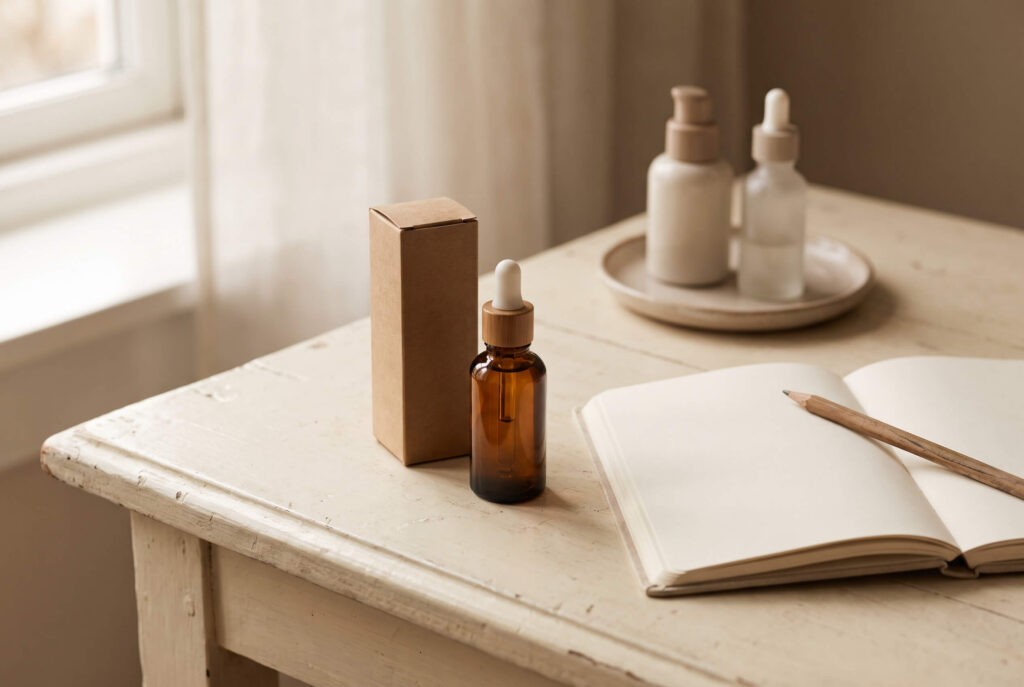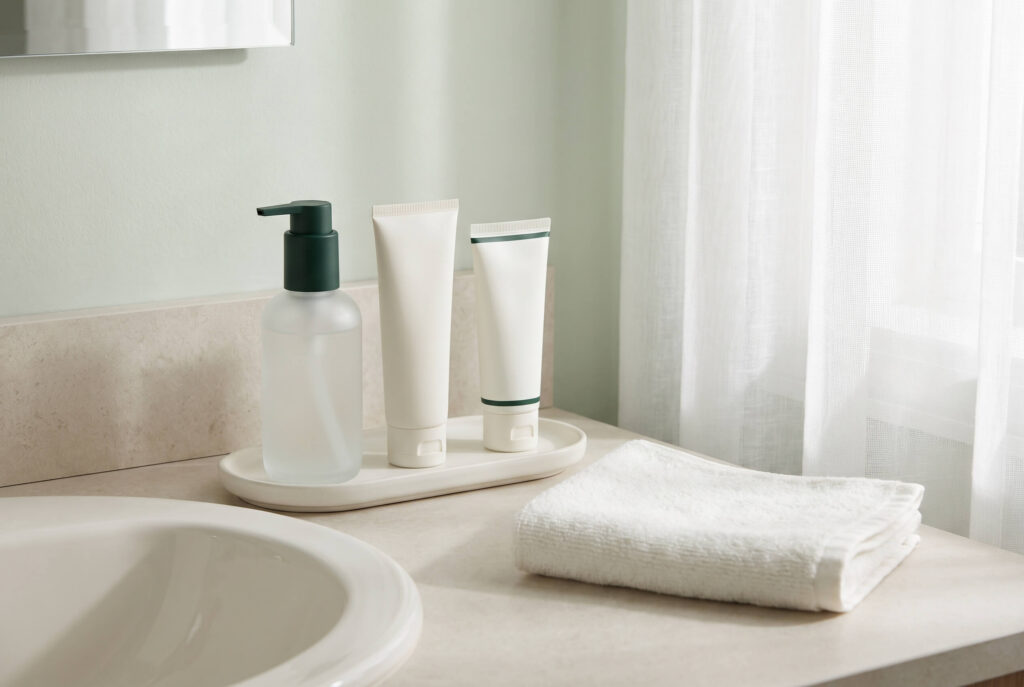

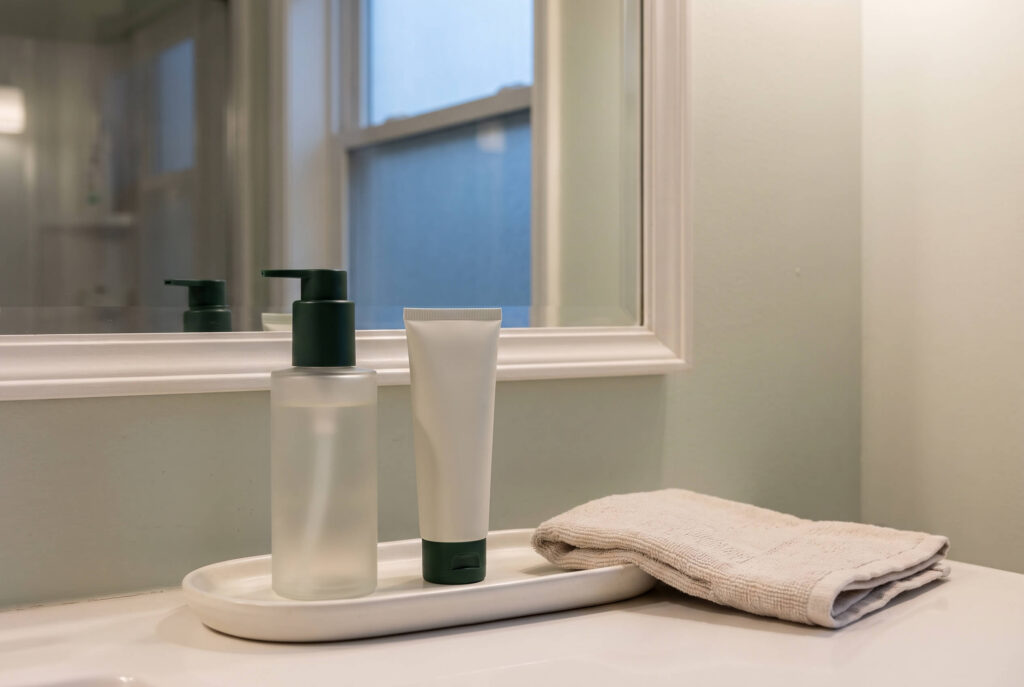
An evening routine begins long before you open a bottle. It begins with making the things you need easy to reach. A clean towel, enough counter space and the products you already understand can be more useful than a shelf full of options.
Think about the point in your evening when you still have the attention to read instructions and use products carefully. That might be before changing into sleepwear or just after you get home. The right cue is the one that belongs naturally to your day.
Separate daily from occasional
Place your regular evening products together. Keep occasional products in another area, with their directions intact. This prevents every bottle from looking like something you should use tonight.
If your routine includes prescribed care, organise around the instructions from your clinician. A general editorial routine should never rearrange those directions. The purpose of the shelf is to make your own instructions easier to follow.
Give cleansing its own moment
Look at what you wore during the day and follow your cleanser’s directions. The American Academy of Dermatology advises removing makeup before bed and avoiding scrubbing. An elaborate sequence is not the objective; a comfortable, understandable process is.
Keep accessories within reach and leave a place for them to dry or be cleaned appropriately. If you use a reusable cloth, plan how it moves into your laundry routine. A practical setup includes what happens after the product has been applied.
Write a routine you can actually read
Use product names instead of abbreviations only you understood when you wrote them. Include the directions that matter, without reducing them to a vague instruction such as use a little. Keep the complete label available for reference.
Your note can be as simple as a photograph of the products laid out in order. Avoid turning it into a long checklist of optional extras. The note should reduce decisions, not give you another task to complete.
Make room for tired evenings
Decide which optional parts you can leave out when you are tired. Keep your essential routine and prescribed instructions clear. You do not need a different shopping list for your busiest days.
Move the routine earlier if you repeatedly find yourself rushing it at bedtime. A familiar cue can help: after putting your bag away, before a book, or after brushing your teeth if that sequence works for you. Treat these as organisational ideas to adapt, not rules.
Close the loop
Put caps back on, return products to their proper storage and leave the surface ready for the morning. This final minute is part of the routine because it makes the next evening easier.
Review the arrangement when something changes in your schedule. A longer commute or shared bathroom may call for a smaller kit. Keeping a routine means allowing its practical setup to evolve while staying attentive to the directions for the products you choose.
An evening ritual does not have to look a certain way in a photograph. It needs to work for the person using it, on an ordinary evening, with the time and space they have.